
講題:Building Evidence Chains for Herbal Medicine:From Clinical Observation to Mechanistic Validation
時間(Time):13:30-15:30 PM, March 30 (Monday), 2026
地點(Place):Lecture Hall R1-B1222
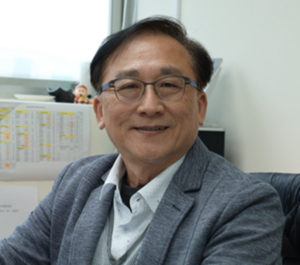
講者(Speaker):Dr. Yuh-Chiang Shen (沈郁強教授)
Abstract
The modernization of multi-component herbal medicine does not hinge on cataloging chemical constituents, but on the ability to translate clinical efficacy signals into mechanistically verifiable molecular pathways. This lecture presents a mechanism-driven, bedside-to-bench evidence-chain framework in which real-world data (RWD) and clinical trial–derived efficacy and safety signals serve as the starting point for hypothesis generation. These hypotheses are interrogated through disease-relevant animal models and multi-omics analyses to identify regulatory nodes and construct cross-level validation architectures. In models of respiratory inflammation and neurodegenerative disorders, clinically observed improvements—such as attenuation of lung injury, organ protection, and preservation of cognitive function—are reformulated as quantifiable immunological and molecular questions. We systematically dissect their regulatory effects on key axes, including innate immune sensing and signaling networks (TLR–MyD88–NF-κB and JAK/STAT), inflammatory amplification and resolution pathways (PI3K/AKT modulation and NLRP3 inflammasome activation), thromboinflammatory coupling and NETosis, and neuroimmune–glymphatic interactions associated with impaired clearance dynamics. Through RNA-seq, integrative multi-omics profiling, and immune cell population dynamics analysis, we identify reproducible immune rebalancing signatures and validate their causal contributions to functional recovery and clinical outcomes using disease-specific animal models. This evidence chain extends beyond correlation by incorporating nodal perturbation and functional endpoints to strengthen causal inference. The framework operates as a bidirectional loop in which clinical data generate biological hypotheses, and mechanistic validation refines patient stratification and trial design through biomarker-guided precision strategies. By integrating systems biology with evidence-based medicine, this model establishes a scientifically rigorous, regulatorily credible, and globally competitive translational pathway for complex herbal therapeutics.
Biography
沈郁強研究員長期深耕創新中醫藥(iTCM)與中藥現代化,研究主軸聚焦兩大領域:「感染免疫與呼吸道發炎疾病」以及「神經退行性疾病與腦中風後遺症照護」。其研發策略以「可被驗證的機轉證據」與「可被推進的轉譯路徑」為核心,整合多體學分析、次世代定序、動物疾病模型與臨床研究設計,建立從藥效評估、作用機制釐清到臨床應用場域導入的整合式研發鏈。
COVID-19 疫情期間,投入並協力推動臺灣清冠一號(NRICM101)與清冠二號(NRICM102)之研發與系統性機制解析;其後進一步以 COPD 與 Poly I:C 等模型,深化闡明清冠系列對先天免疫與關鍵發炎軸線(如 TLR、JAK/STAT、PI3K/AKT)、NET 形成與細胞激素風暴相關路徑之調控能力,並延伸至血栓形成、肺損傷與肺纖維化等臨床關鍵結局,以回應慢性呼吸道疾病與急性肺損傷之未滿足醫療需求。同時,他亦持續拓展適應症與證據架構:清冠一號延伸應用於 COVID 後腦霧;清冠二號則聚焦邦克烈酸(bongkrekic acid)所致多重器官衰竭、以及 COPD 相關肺纖維化等高風險情境,並結合真實世界數據(RWD)與臨床試驗規劃,強化可落地的臨床證據鏈與轉譯可行性。
在神經領域方面,他帶領團隊推進缺血型中風後照護配方臺灣醒腦一號(NRICM301),並參與失智症相關之臺灣清腦一號(NRICM201)研發,將中醫藥研發版圖由急性傳染病防治拓展至高齡化社會的長期照護需求。其中,臺灣醒腦一號已完成專利布局與技術移轉,並進入臨床試驗階段。其代表性學術成果亦展現跨領域整合與轉譯導向的特色,例如:EJTCM 2025 探討睡眠剝奪導致的認知障礙與神經退化,指出其與荷爾蒙與膠淋巴(glymphatic)失衡等分子機制密切相關;Frontiers in Pharmacology 2025 發表清冠二號合併 N-acetylcysteine(NAC)對邦克烈酸中毒所致肝腎損傷之協同保護;以及 Pharmaceuticals 2026 報導清冠二號對 COPD 相關發炎性肺傷害之免疫失衡逆轉與肺功能改善。透過專利、技轉與國際推廣,他持續推動中醫藥現代化與產業化,提升臺灣在全球生醫轉譯與公共衛生策略中的能見度與影響力。
Dr. Yuh-Chiang Shen has long been dedicated to advancing innovative Traditional Chinese Medicine (iTCM) and the modernization of herbal medicine. His research focuses on two major domains: infection, immunity, and respiratory inflammatory diseases, and neurodegenerative disorders and post-stroke care. His translational strategy is centered on generating mechanistically verifiable evidence and establishing clinically actionable translational pathways. By integrating multi-omics analyses, next-generation sequencing, disease animal models, and clinical study design, he has built a comprehensive R&D framework spanning pharmacological evaluation, mechanistic elucidation, and clinical implementation.
During the COVID-19 pandemic, Dr. Shen actively contributed to the development and systematic mechanistic investigation of Taiwan Chingguan No.1 (NRICM101) and Taiwan Chingguan No.2 (NRICM102). Subsequently, using COPD and Poly I:C models, his team further clarified the regulatory effects of the Chingguan series on innate immunity and key inflammatory axes, including TLR, JAK/STAT, and PI3K/AKT signaling pathways, as well as NET formation and cytokine storm–associated cascades. These mechanistic insights were extended to clinically relevant outcomes such as thrombosis, lung injury, and pulmonary fibrosis, addressing unmet needs in chronic respiratory diseases and acute lung injury.
At the same time, he has expanded therapeutic indications and strengthened the evidence framework: NRICM101 has been explored for post-COVID cognitive dysfunction (“brain fog”), while NRICM102 has been investigated for bongkrekic acid–induced multi-organ failure and COPD-associated pulmonary fibrosis in high-risk settings. By incorporating real-world data (RWD) and clinical trial planning, he continues to reinforce the clinical evidence chain and translational feasibility of these formulations.
In the neurological field, Dr. Shen leads the development of Taiwan Xingnao No.1 (NRICM301) for post-ischemic stroke care and participates in the development of Taiwan Qingnao No.1 (NRICM201) for dementia-related conditions, extending TCM innovation from acute infectious disease management to long-term care in aging societies. NRICM301 has completed patent positioning and technology transfer and has entered clinical trials.
His representative academic publications further reflect this cross-disciplinary and translational orientation. An EJTCM (2025) study examined sleep deprivation–induced cognitive impairment and neurodegeneration, highlighting the close association with hormonal dysregulation and glymphatic system imbalance. A 2025 publication in Frontiers in Pharmacology reported the synergistic protective effects of NRICM102 combined with N-acetylcysteine (NAC) against bongkrekic acid–induced hepatic and renal injury. In 2026, Pharmaceuticals published findings demonstrating immune rebalancing and pulmonary function improvement by NRICM102 in COPD-associated inflammatory lung injury.
Through patents, technology transfer, and international collaboration, Dr. Shen continues to advance the modernization and industrialization of TCM, strengthening Taiwan’s global visibility and influence in biomedical translation and public health strategy.