
講題:
工程化動態人源微生理系統:從生物反應器與生醫材料到器官晶片及轉譯應用
Engineering Dynamic Human Microphysiological Systems: From Bioreactors and Biomaterials to Organ-on-a-Chip Platforms and Translational Applications
時間(Time):13:30-14:30 PM, Oct. 5 (Monday), 2026
地點(Place):Lecture Hall R1-B1122
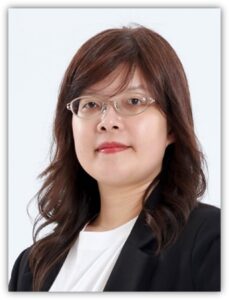
講者(Speaker):陳靖昀博士 (Dr. Ching-Yun Chen)
Abstract:
Physiologically relevant in-vitro models are essential for bridging the gap between conventional cell culture, animal studies, and clinical translation. This presentation introduces our research on engineering dynamic human microphysiological systems by integrating biomaterials, bioreactors, induced pluripotent stem cells, organoids, and organ-on-a-chip technologies. Rather than treating cells, materials, and devices as separate components, our approach reconstructs tissue-specific biochemical, ionic, mechanical, and cellular microenvironments within controllable experimental platforms. Representative studies include dynamic ion-regulation systems for inner-ear models, endometrial organoid platforms, engineered skin models, and microphysiological systems for bone, joint, and intervertebral disc research. These platforms are designed not only to reproduce tissue structure, but also to evaluate functional responses, disease mechanisms, material-tissue interactions, therapeutic efficacy, and safety. By incorporating dynamic culture conditions and human-derived biological models, they provide a practical foundation for drug screening, biomedical material evaluation, and the development of New Approach Methodologies (NAMs). The research further extends beyond platform development toward translational application through clinical collaboration, intellectual property development, technology transfer, and academia-industry partnerships. Looking forward, the integration of human-relevant models with biosensing, biomedical electronics, imaging, and quantitative analysis will enable more comprehensive and standardized preclinical evaluation. This research framework can complement existing strengths in biomaterials, microfluidics, nanomedicine, medical devices, and biomedical sensing, while providing a shared biological validation pathway for advancing interdisciplinary technologies from laboratory development toward clinical and industrial applications.
關於講者更多學歷、經歷資料,請參閱網址:
講者CV:Dr.陳靖昀